
John Ternus— The Man Apple Hid in Plain Sight
John Ternus— The Man Apple Hid in Plain Sight
 Tosin Adeoti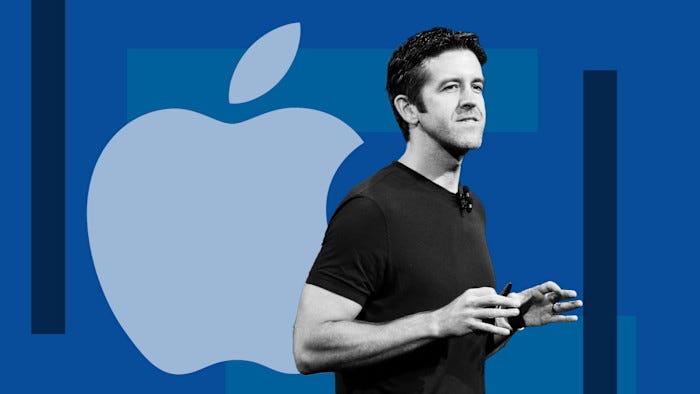
The moment felt oddly anticlimactic.
On Wednesday, the news alert flashed across my phone. Tim Cook, who had run Apple since the death of Steve Jobs in 2011, would step down in September. The new chief executive had already been chosen. His name was John Ternus.
For most readers the name meant little. That was not surprising. Apple’s inner leadership circle has always operated with a kind of deliberate invisibility. Even though the company builds some of the most recognizable products in modern life, the people who design them often remain strangers outside Cupertino. What surprised me was something more personal.
Last year I had spent weeks reading Apple in China by Patrick McGee. it was the best book I read in 2025. The book is one of the most detailed portraits ever written about Apple’s rise, particularly the vast network of suppliers, engineers, contractors, logistics specialists, and government officials who turned the iPhone into the most profitable consumer product in history. It is a dense, immersive work full of personalities who shaped the company’s supply chain revolution.
When the announcement about Ternus arrived, the name didn’t ring a bell/ But no worries, I had written a post recently about how forgetting what we read is not abnormal. All I had to do is pick up the book and refresh my memory. I assumed his name would appear somewhere in that sprawling narrative. Someone trusted with the future of a four trillion dollar company surely would have crossed the stage at least once. I opened the digital edition of the book, pressed Ctrl F, and typed his name.
Nothing appeared.
Not a single mention.
For a moment the absence felt almost comical. Here was the man chosen to lead the third most valuable technology company on earth, yet he moved through one of the most comprehensive books about Apple without leaving a trace. The discovery said something profound about the culture of the company he now leads. Apple has long celebrated the myth of visionary founders —Steve Jobs is almost synonymous with the title in Silicon Valley — yet its real engine has always been a quiet army of engineers working far from the spotlight.
John Ternus belongs to that army.
He grew up in California during the early years of Silicon Valley’s transformation from orchards to laboratories. His path into engineering began in a way that now feels almost quaint compared with the mythology surrounding tech entrepreneurs. There was no startup launched in a garage, neither did he develop a viral app. Instead there was school, mathematics, mechanical diagrams drawn on white paper, and long hours learning how machines fit together.
At the University of Pennsylvania he studied mechanical engineering and joined the varsity swim team. Teammates later remembered him as a tall man with a focused demeanor. The kind of athlete who rarely talked during practice even as he finished every lap with calm precision. His senior project revealed a hint of the mindset that would define his career. He designed a mechanical feeding arm controlled by head movements, a device meant to help quadriplegics eat without assistance. The machine looked awkward in prototype form, wires spilling from its frame. At that stage, he didn’t really care. Technology should solve real problems even if you start without finesse.
After graduating in 1997 he spent several years at a small virtual reality startup called Virtual Research Systems. The company built headsets during an era when VR remained a futuristic curiosity rather than a commercial industry. The work exposed him to hardware design at the frontier of computing, although the company itself never became famous. In July 2001 he joined Apple.
And what timing that proved to be. Apple in 2001 was not the juggernaut we know today. The iPhone did not yet exist. The company’s identity revolved around colorful iMac computers and a stubborn belief that design mattered as much as raw computing power. Ternus began unheralded, working on display technology for Mac computers. His first manager, Steve Siefert, later recalled that the young engineer displayed a curious habit that stood out in a corporate culture filled with ambition. For instance, when he was promoted early in his career, Ternus declined the private office that came with the new title. He chose to remain seated among his team.
It might be a small decision but it became part of his reputation inside the company. Apple employees described him as approachable and intensely collaborative. Even better, he was unusually calm during product crises. Hardware development inside Apple, as McGee describes, often resembles controlled chaos. You’d find engineers arguing about materials and designers obsessing over microscopic tolerances. Even supply chain specialists could be found warning that factories cannot manufacture certain parts at scale. In those meetings Ternus developed a reputation for absorbing tension without amplifying it.
By the mid 2000s he was leading the engineering team responsible for the iMac G5. One experimental idea involved using magnets to hold the computer’s glass display in place rather than traditional fasteners. The concept sounded risky at the time, but Ternus pushed the team to pursue it. The design eventually worked and became part of Apple’s evolving philosophy that hardware should feel seamless, almost inevitable, when placed on a desk.
His career advanced steadily. By 2013 he had become vice president of hardware engineering, overseeing both Mac and iPad teams. Eight years later Apple promoted him to senior vice president responsible for the engineering behind nearly every physical product the company sells. That meant supervising the development of the iPhone, the Apple Watch, the AirPods wireless earbuds, and the experimental Apple Vision Pro headset.
Those years included one of the most consequential technical transitions in Apple’s history. For decades the company relied on processors manufactured by Intel for its Mac computers. In 2020 Apple shifted to its own proprietary silicon chips, a gamble that promised faster performance and greater energy efficiency. The decision involved thousands of engineers and years of planning, although insiders credit Ternus with guiding the hardware side of the transformation.
Outside Apple he remained nearly invisible. Go to his LinkedIn page and you will see nothing beyond job titles. Public interviews are rare. When he appears on stage during Apple product launches he speaks with the understated tone of someone more comfortable discussing thermal performance than corporate vision.
Inside the company, however, his influence grew.
Around 2018 Apple faced a small but revealing dilemma while developing new iPhone models. Engineers wanted to add a tiny laser component that could improve photography and enable more precise augmented reality features. The technology excited Apple’s design teams but carried an additional cost of about forty dollars per phone. What to do? Ternus suggested installing the component only in premium “Pro” models aimed at Apple’s most enthusiastic customers. The compromise protected profit margins while allowing Apple to experiment with new capabilities.
That’s Ternus. As colleagues describe him, he balances curiosity with restraint.
That quality may soon be tested on a far larger stage. When he becomes chief executive on September 1, 2026, he will inherit a company transformed by Cook’s fifteen-year tenure. Apple’s market value now surpasses four trillion dollars. Annual revenue from services such as the App Store, Apple Pay, and iCloud exceeds one hundred billion dollars. The iPhone still generates roughly half of Apple’s sales, still the company also faces intense pressure from geopolitical tensions and technological shifts.
Artificial intelligence now dominates the technology industry’s imagination. Competitors race to build conversational assistants and powerful language models that reshape how humans interact with computers. Apple has moved cautiously in this domain, emphasizing privacy and device level processing rather than massive cloud infrastructure. The strategy has drawn criticism from analysts who fear the company may fall behind.
Ternus must decide whether Apple accelerates its investment or continues its deliberate approach.
He will also face the complicated politics surrounding Apple’s manufacturing network, much of which remains anchored in China. For decades the company built a supply chain that stretched across factories in Shenzhen and other industrial cities. Rising tensions between Washington and Beijing have forced Apple to expand production to places like India. Navigating those relationships will require diplomatic skill that Cook cultivated carefully over years.
Inside Apple’s headquarters in Cupertino another question echoes quietly through the hallways. Can the quiet engineer become a visionary leader?
The comparison with Steve Jobs lingers over every Apple executive who rises toward the top job. Jobs represented the archetype of the founder as creative prophet, unveiling products that seemed to leap ahead of their time. Cook represented something different. He brought operational discipline that transformed Apple into the most profitable company in history.
Ternus may represent a third model. Neither prophet nor supply chain architect, he is a builder. A man who spent decades inside laboratories listening to the arguments about circuits and material tolerance that shape how machines are born.
When I closed Patrick McGee’s book that day, I kept thinking about that empty search result on the screen. No mention. No anecdote. Not even a passing reference. How could that be?
Perhaps that absence tells the story better than any paragraph could. Apple’s history is often told through the voices of its most famous leaders, yet the company’s real foundation rests on engineers who rarely appear in books or headlines. For twenty five years John Ternus belonged to that hidden layer.
Now he stands at the center of the stage, responsible for guiding one of the most powerful companies on earth into a future that looks far less predictable than the past.
The engineer who barely appeared in the story has become the one writing the next chapter. Godspeed!

