
Book Review — “The Infinity Machine” by Sebastian Mallaby
Book Review — “The Infinity Machine” by Sebastian Mallaby
 Tosin Adeoti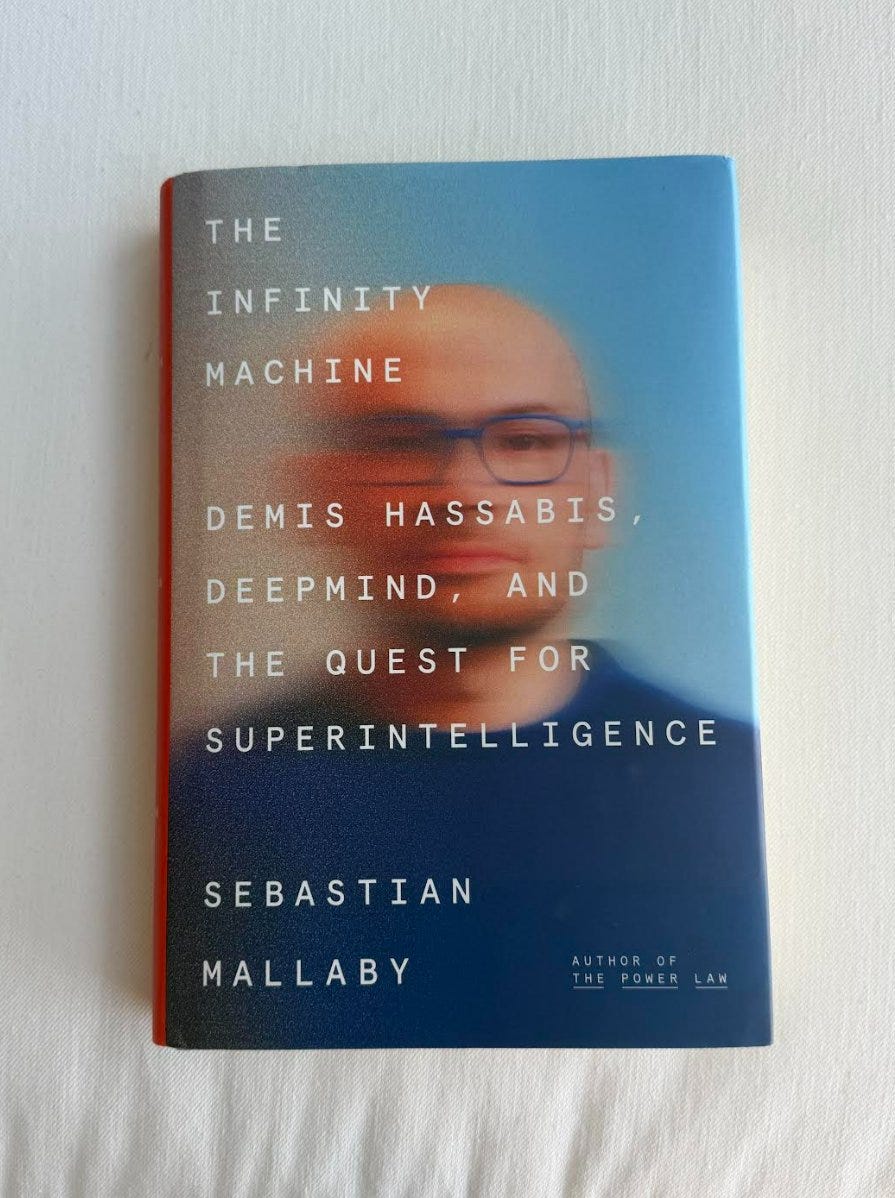
Sebastian Mallaby’s The Infinity Machine: Demis Hassabis, DeepMind, and the Quest for Superintelligence is a sweeping narrative about the people and ideas behind modern artificial intelligence. It is also a portrait of ambition. The book traces how a chess prodigy from London grew into one of the most influential figures in technology.
Demis Hassabis’s early life reads almost like a myth in the making. Born to a Greek Cypriot father and a Singaporean mother, he showed unusual intellectual curiosity from childhood. He learned chess at four and soon began winning competitions, becoming a chess master at just 6. Yet even as a young player he sensed that mastering chess alone would be too narrow a pursuit. Intelligence, he believed, should be used for larger questions.
That instinct pushed him toward computing. As a child he spent his chess prize money on a ZX Spectrum computer and began writing programs. Even though indulging in a hobby, Mallaby describes this moment as the origin of a life project. Hassabis had begun chasing something far more ambitious than games. He wanted to understand intelligence itself.
Mallaby explains the intellectual leap that followed. Hassabis came to see the universe through the lens of information. In the book he reflects on this idea with striking clarity:
“That’s the way I still view the whole universe. I think information is the fundamental unit.”
This belief eventually shaped the founding of DeepMind, the company that would build impressive systems such as AlphaGo and AlphaFold. AlphaGo’s victory over a world champion Go player marked a turning point in machine learning. AlphaFold later solved the problem of predicting protein structures, an achievement so important that it led to Hassabis receiving the Nobel Prize in Chemistry.
Mallaby writes these breakthroughs with narrative energy. His storytelling benefits from extraordinary access. Interviews with colleagues, scientists, executives, and investors bring the reader into the labs and boardrooms where decisions about the future of AI are made. The book often reads like a backstage account of the technology industry.
Some of the most revealing scenes come from the rivalry and tension among AI’s leading figures. At one gathering, Elon Musk and Larry Page debated the fate of humanity in an age of superintelligence. Page suggested that machines might eventually replace humans and that evolution would favor whichever intelligence proved superior. Musk recoiled at the idea. The disagreement captured a philosophical divide within Silicon Valley itself. According to the book, Page even accused Musk of being a “speciesist,” someone biased in favor of human life over machine intelligence.
Moments like this give the book its drama. They remind readers that the AI revolution is not only technical. It is also ideological. People are arguing about what intelligence is and what role humanity should play once machines approach it.
Mallaby also offers a useful explanation of how AI works. Artificial intelligence, he argues, is fundamentally about pattern discovery within enormous datasets. Whether through deep learning or reinforcement learning (I had a lot of fun going into the rabbit hole of RL online), machines learn by navigating immense quantities of information. The “infinity machine” of the title is a system capable of exploring nearly infinite combinations of data and experience.
However, the book’s greatest strength is also its main weakness. Mallaby admires his central character. Demis Hassabis often appears as a visionary scientist pursuing knowledge for the benefit of humanity. This portrayal occasionally drifts toward hagiography. The narrative rarely interrogates the ethical contradictions of the AI industry.
One example is the issue of intellectual property. Modern AI models are trained on enormous quantities of scraped data from writers, artists, programmers, and other content creators. The book touches only lightly on the moral implications of this practice. The same restraint appears when discussing the culture inside elite AI labs. Accounts of exhausting work schedules and internal tensions remain largely in the background. I got to know of many of these controversies from reading other books about the industry, and I had expected Mallaby to touch on them. But he glossed over some and avoided the mention of others.
Because of this, the book sometimes feels less like a critical investigation and more like a legacy narrative for the leaders of the AI boom. Readers searching for a deeply skeptical account may find themselves wishing Mallaby had asked sharper questions.
Even so, The Infinity Machine remains an engrossing chronicle of one of the most important technological revolutions in history. It captures the improbable path that led from a child writing chess and video game programs in London to the creation of machines that can decode proteins and defeat world champions. Few books explain the human side of AI development with such clarity.
For readers interested in the future of intelligence and the scientists and engineers at the heart of it, this book provides a valuable window into the minds shaping our era.
But it also leaves lingering questions.
If AI becomes the most powerful scientific tool humanity has ever created, who will control it? Will companies pursue knowledge, profit, or dominance? And if the builders of these systems believe intelligence itself should evolve beyond humanity, what does that mean for the rest of us?
Those questions remain unresolved. Perhaps that uncertainty is the most honest ending a book about artificial intelligence can offer.

