
What Isolation Does to the Human Mind
What Isolation Does to the Human Mind
 Tosin Adeoti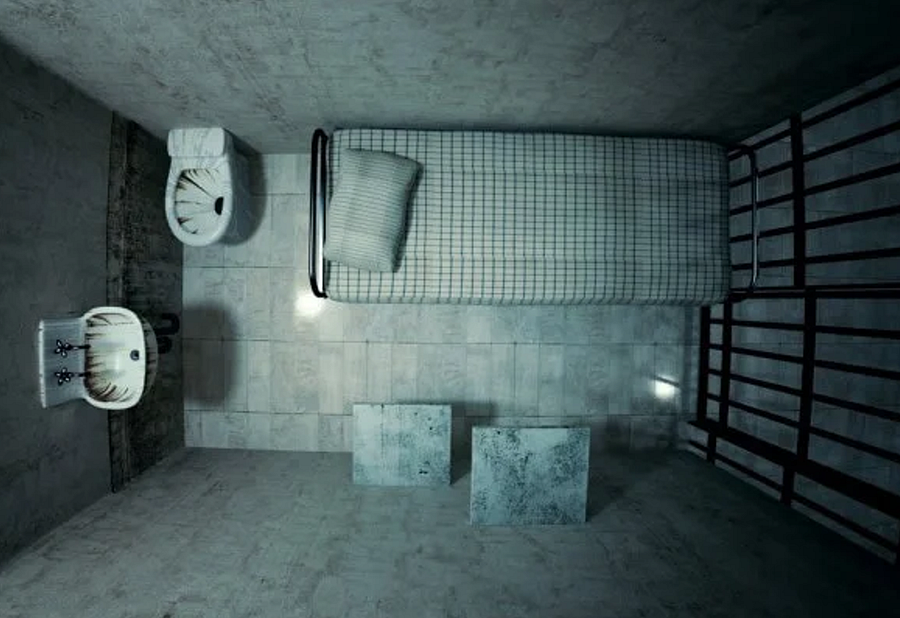
Last year I had to travel somewhere for a stretch of time where I knew absolutely nobody.
Ordinarily, that should have suited me. I’ve always considered myself an introvert. The sort who says, rather smugly, that if you give me books and food, I could happily disappear from the world for weeks. In fact, I used to roll my eyes at Nigerians abroad who complained about loneliness. They would complain that there are no parties to attend and that nobody was answering their greetings on the street.
Must you greet?, I would say to myself. We just cannot mind our own business, I would say in my mind.
Someone in Canada even told me about Seasonal Affective Disorder (SAD), which is a type of depression which happens during winter when there is reduced sunlight and interaction with people is vastly reduced. To me, this could never happen to me. A mentally strong Igbomina boy? Cmon!
The experience last year humbled me.
And made me think about something far darker.
Solitary confinement.
Because if a voluntary period of isolation in comfortable circumstances can feel oppressive, imagine what happens when isolation is imposed deliberately as punishment.
In prisons around the world, solitary confinement typically means being locked alone in a cell for 22 to 24 hours a day, often in a room no larger than a parking space. Human contact is minimal or nonexistent. Conversation is rare. In some cases, prisoners eat, sleep, and use the toilet in the same cramped enclosure without meaningful interaction with another human being for weeks, months, or even years.
The psychological consequences can be devastating.
Researchers have documented a cluster of symptoms so common among prisoners in solitary confinement that it is sometimes called “SHU syndrome,” after the Special Housing Units used in many American prisons. Prisoners report hallucinations, paranoia, panic attacks, hypersensitivity to sound, memory loss, and severe anxiety. Many develop depression so intense that self-harm becomes common.
One of the most famous cases is Albert Woodfox, a member of the Angola Three. Woodfox spent 43 years in solitary confinement, one of the longest such imprisonments in modern history. His cell measured roughly 6 by 9 feet. For decades, he spent 23 hours a day inside it.
To grasp that number is almost impossible. Forty-three years. Guys, life expectancy for men in Nigeria is just 53. So, many Nigerians will not even live for that long.
Yet every day for over four decades, the walls around Woodfox remained the same.
And you know the worst thing about his case?
He was wrongfully convicted of a murder of a prison guard.
43 years!
Even shorter periods can have profound effects.
Psychologist Craig Haney, who has studied prison conditions extensively, found that after just a few days in extreme isolation, many prisoners begin to experience cognitive disturbances. After weeks or months, the damage can become severe. Prisoners talk to themselves. They pace endlessly. Some begin to lose the ability to hold coherent conversations when they eventually return to normal prison populations.
Even Charles Dickens, after visiting the prison in 1842, wrote that solitary confinement was “cruel and wrong,” describing prisoners who had been driven into madness by the silence.
Modern neuroscience has begun to explain why.
Human beings are deeply social creatures. Our brains are wired for interaction. Conversation, eye contact, shared activity, even casual proximity with others help regulate emotion and cognition. When those signals disappear, the mind begins to struggle to maintain equilibrium.
Isolation does not simply make people lonely. It can literally destabilize the brain.
Which is why the United Nations’ Mandela Rules classify prolonged solitary confinement, defined as more than 15 consecutive days, as a form of cruel, inhuman, or degrading treatment.
Thinking back to my brief experience of being cut off from familiar people, I realize how quickly the absence of ordinary human contact begins to bite. I had my phone. I had books. I had the freedom to step outside whenever I wanted.
And still, it felt oppressive.
Now imagine solitary confinement.
Just silence. And walls.
For days, months, sometimes years.
Really crazy stuff.

