
Greg Abel and the Burden of Inheriting a Legend
Greg Abel and the Burden of Inheriting a Legend
 Tosin Adeoti
 The Day the Oracle Stepped Back
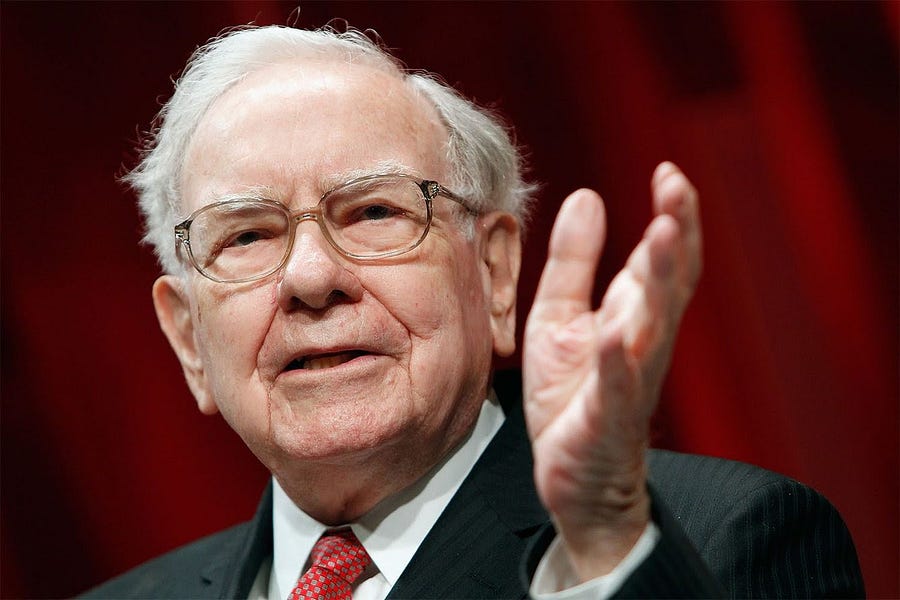
When Warren Buffett walked out of his office for the last time as chief executive of Berkshire Hathaway on December 31, 2025, it was the closing of one of the most consequential chapters in modern financial history. For more than six decades, 95-year-old Buffett ran a company that shaped how capital moved and patience was rewarded. In that space of time, he became a single investor whose temperament came to stand in for the mood of the American economy itself.
Buffett took control of Berkshire Hathaway in 1965, when it was a struggling New England textile firm worth less than $20 million. What followed was not a straight line of success, but a slow, compounding transformation that mirrored the philosophy he preached. Over sixty years, Berkshire evolved into a sprawling conglomerate with interests ranging from insurance and railroads to energy, manufacturing, and consumer brands. By 2024, the company’s market capitalisation had crossed $1 trillion, making it one of only two non-technology companies in history to reach that milestone. In doing so, Buffett delivered a compounded annual return of roughly 20 percent for shareholders, nearly double the long-term return of the S&P 500.
This is the inheritance now passed to Greg Abel.
Abel, a Canadian-born executive who rose through Berkshire Energy, officially took over as chief executive On January 1, 2026, stepping into a role that few people in global finance would envy. The challenge is not about managing a company of Berkshire’s size. It is to lead an institution whose identity has been inseparable from the instincts, discipline, and moral authority of one man for longer than many of its shareholders have been alive.
Buffett leaves behind a balance sheet that is both a gift and a burden. Berkshire is sitting on approximately $358 billion in cash and short-term Treasury bills, the largest cash pile in its history. For the past three years, the company has been a net seller of equities, reducing exposure for twelve consecutive quarters. Buffett made little effort to disguise his view that valuations had become stretched, preferring liquidity to action. That restraint, celebrated in hindsight when markets correct, now places enormous pressure on Abel to decide when patience becomes paralysis.
Investors are watching closely, and not without anxiety. Although Berkshire’s shares ended 2025 up around 11 percent, they have traded below their levels prior to Buffett’s retirement announcement in May. The market’s unease is not irrational. Abel does not yet possess a public track record of iconic capital allocation decisions in the way Buffett did with Coca-Cola in 1988 or Apple beginning in 2016, a position that eventually grew to more than $170 billion at its peak. Compounding the uncertainty was the recent departure of Todd Combs, one of Buffett’s long-trusted lieutenants, who left for JPMorgan Chase after more than a decade at Berkshire. With Combs gone, investors are left wondering who, precisely, will be making the most consequential calls.
But it would be a mistake to think Abel is inheriting a rudderless ship. Berkshire’s structure was designed precisely to survive this moment. The company owns more than 60 operating businesses, many of them fully autonomous, throwing off consistent cash flows. Its insurance operations, led by GEICO and National Indemnity, remain the engine of its investment float. Burlington Northern Santa Fe, acquired outright in 2010, continues to provide exposure to the real economy in a way few balance sheets can replicate. Berkshire Energy, Abel’s former domain, has quietly become one of the largest utilities in North America, with billions invested in renewable infrastructure.
What Abel must now prove is not that he can preserve Berkshire’s culture, but that he can evolve it without betraying its core logic. Buffett’s genius was never about forecasting interest rates or timing recessions. As many books have written, and especially in a book I read last year by William Green called “Richer, Wiser, Happier”, it was about temperament. He built a system that rewarded slowness, punished ego, and allowed capital to wait indefinitely for its moment. That philosophy will be tested in an era defined by political volatility and markets increasingly driven by narrative rather than fundamentals.
Buffett, for his part, is not disappearing. He remains chairman of Berkshire Hathaway and will continue to write his annual letters, documents that have become canonical texts for investors worldwide. In them, he has always been careful to frame success as something almost accidental, the product of discipline rather than brilliance. Whether those words will carry the same authority without his hand on the wheel is an open question.
Transitions of this magnitude are rare. The closest parallel may be the handover of Disney from Walt to Roy Disney, or the moments when technology founders stepped aside and left institutions that had grown larger than their personalities. Some transitions fail quietly. Others redefine the institution for a new generation. The difference often lies in whether the successor understands that legacy is not something to be preserved in amber, but something to be stewarded with humility. That’s the key, not really about strategy.
Greg Abel now holds the keys to one of the most important financial institutions in the world. The cash is there. The structure is there. The trust, for now, is conditional. Time will tell whether Berkshire without Buffett becomes merely a great company, or whether it remains a moral benchmark in a market that often forgets the value of patience.
But we know this: The age of the Oracle has ended. The Oracle of Omaha.

