
When Leaders Stop Hearing the Truth
When Leaders Stop Hearing the Truth
 Tosin Adeoti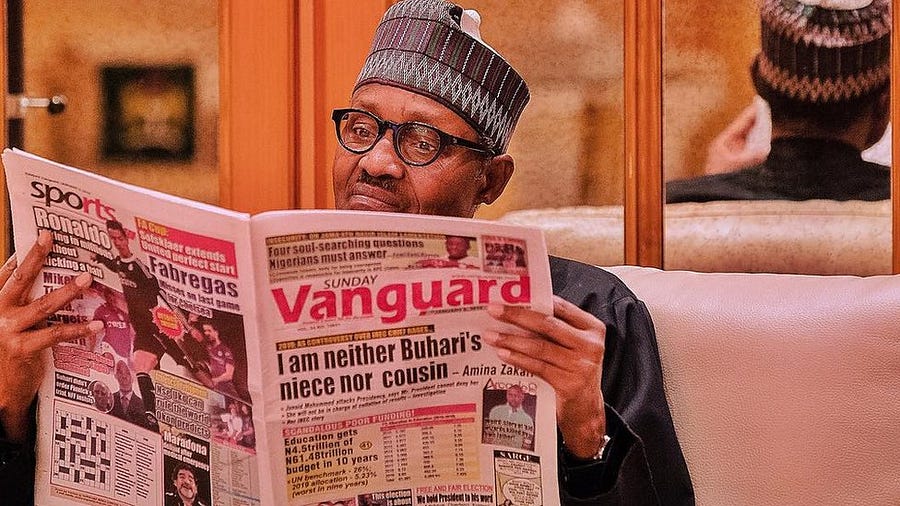
In the early hours of March 1, 1953, Joseph Stalin lay unconscious on the floor of his dacha outside Moscow. He had suffered a massive stroke. The most powerful man in the Soviet Union, feared by millions, was helpless.
And yet no one rushed to save him.
His guards had noticed something was wrong hours earlier. The lights were still on. Stalin had not emerged from his room. This alone was unusual. But no one dared open the door. Under Stalin, approaching him uninvited could be fatal. When they finally entered, they found him collapsed, unable to speak, soaked in urine.
Still, no doctor was summoned immediately.
Why?
Because Stalin himself had spent the preceding months accusing doctors, especially Jewish doctors, of conspiring to kill Soviet leaders. The infamous “Doctors’ Plot” had led to arrests and executions. To call a doctor now, especially a Jewish one, was to risk being accused of treason. Fear froze everyone in place.
By the time medical help arrived, it was too late. Stalin died a few days later, not only from a stroke, but from the information climate he had created. A leader so insulated by terror that truth could not reach him in time to save his life.
70 years later, that lesson resurfaces. According to Charles Omole, author of Muhammadu Buhari: From Soldier to Statesman, Buhari’s inner circle allegedly curated the newspapers he read. Not summaries. Not briefings. Actual newspapers, edited to show him what they wanted him to see.
If true, this is extraordinary. A country of over 200 million people governed by a man whose daily window into reality was filtered through loyal hands.
Yet it is also entirely believable.
Buhari was known to delegate heavily. Delegation itself is not a flaw. But delegation without verification is an invitation to capture. When leaders stop asking uncomfortable questions and allow aides to become gatekeepers of reality, governance quietly slips from their hands.
We have seen this pattern again and again.
In 1812, Napoleon Bonaparte marched into Russia with the largest army Europe had ever seen. His maps were elegant, detailed, but alas disastrously wrong. They underestimated distances and assumed cooperation from locals who instead burned their own cities.
Napoleon’s staff feared contradicting him. Reports were softened. Bad news was delayed. By the time reality asserted itself, the Grand Army was starving, freezing, and collapsing. Of the roughly 600,000 men who entered Russia, fewer than 100,000 returned.
What Napoleon lacked was not intelligence but unfiltered truth.
Contrast this with Abraham Lincoln during the American Civil War. Lincoln deliberately filled his cabinet with political rivals who disliked and openly challenged him. William Seward believed himself more qualified for the presidency. Salmon Chase actively schemed against Lincoln while serving under him.
Lincoln knew this. He kept them anyway.
There were accounts of tensed cabinet meetings. Voices were raised. Decisions were delayed. But Lincoln wanted friction. He wanted dissent to surface blind spots. When generals sent overly optimistic battlefield reports, Lincoln asked follow-up questions.
He understood something many leaders forget. Comfort is not clarity.
Nelson Mandela practiced a quieter version of the same discipline. As president, he read voraciously, not only government briefs but newspapers that criticized him harshly. Third-party accounts showed someone who invited activists and even political opponents to private conversations. Mandela believed that leadership meant hearing grievances before they hardened into rebellion.
Lee Kuan Yew, Singapore’s founding prime minister, institutionalized this instinct. He demanded data, not flattery. Civil servants were encouraged to challenge ministers openly in internal meetings. Wrong projections were dissected without mercy. Careers survived disagreement. What did not survive was deception.
These leaders were not perfect. But they were reachable by reality.
What the Buhari revelations underline is not merely a personal failing of a man who took the country’s economy back many decades. They also expose a systemic danger.
Leaders do not just consume information. They shape the incentives around truth. As we have seen, when you reward aides for loyalty over accuracy, you make reality optional. Messengers who are punished for bad news ensure that silence becomes rational. When leaders stop seeking truth, truth stops seeking them.
This is how states drift.
And this was exactly what we saw during the Buhari administration. Famines go unacknowledged until bodies appear. Insecurity festering while reports claim progress. Youth killed in cold blood during protests while the administration put out releases about not seeing anyone asking for lost relatives. People collapsing in bank halls during the currency redesign debacle while the administration kept saying only criminals were complaining. Filtered truth meant that while citizens were scream, all the president heard was applause.
Nigeria is not unique in this. But Nigeria has paid dearly for it. Economically. In insecurity. In apathy towards the state of the nation.
To govern is to accept discomfort. To hear what you do not want to hear. To read what offends you. To interrogate what flatters you. Leaders who outsource their curiosity eventually outsource their authority.
Stalin learned this too late. Napoleon learned it in exile. Others learned it in time to change history.
Every leader, and every aspiring one, must choose.
Do you want to be protected from reality, or accountable to it?
Because in the end, truth always arrives. The only question is whether it comes early enough to matter. In the case of Muhammadu Buhari, he is not here to answer for the harm he’s caused the Nigerian nation, and that is the tragedy of it all.

