
Christopher Kolade: The Last Gentleman
 Tosin Adeoti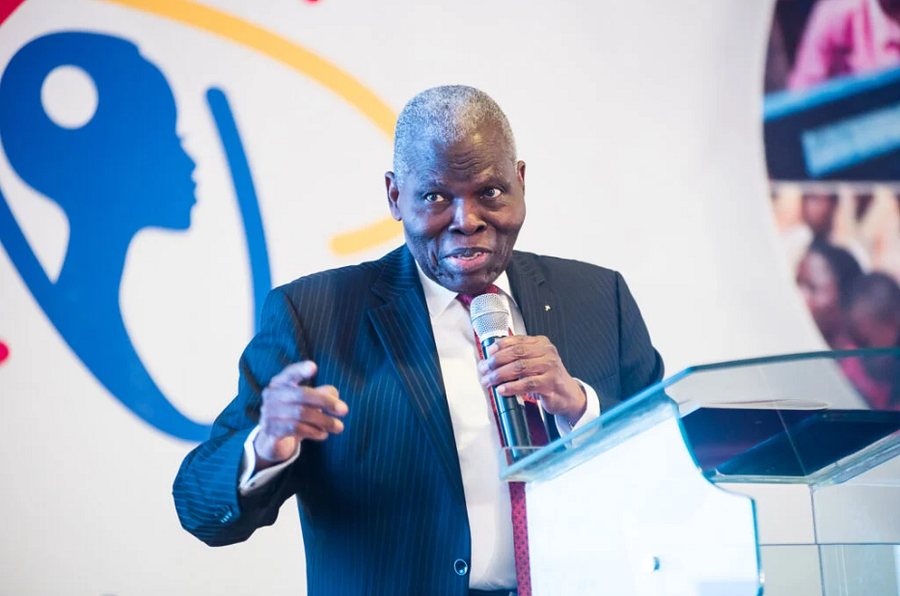
I never met Christopher Kolade.
But I once tried to.
In 2019, when I began my ghostwriting business, I made a list of people whose stories I wanted to tell. His name sat there on my Google Keep, bold and underlined. Life moved on. Access never came. Now he is gone, and suddenly the name that once floated across business pages has turned into a memory that compels reflection.
For some reason I had never really paid attention to him until I saw his face on the news in 2012, framed by controversy. President Goodluck Jonathan had appointed him Chairman of the Subsidy Reinvestment and Empowerment Programme, better known as SURE-P. The policy had slashed Nigeria’s fuel subsidy and triggered nationwide outrage. Protesters filled the streets. Politicians fumed. Current president, Bola Tinubu, furious against the removal of subsidy, led the onslaught.
In the middle of that storm, the president turned to a man known not for politics, but for principle. Kolade accepted. Many thought he had crossed over. The opposition accused him of betrayal. Some in his church circles called him naïve. I could not understand it then. Why would a man of such standing agree to stand in fire?
He said little. And when he finally resigned less than two years later, it was the quiet kind of departure that says more than a press conference ever could.
Kolade was born December 28, 1932, in Ido Faboro, Ekiti State, to an Anglican missionary father. His upbringing was strict but stable. Christ School, Ado Ekiti and Government College, Ibadan, shaped his early intellect. Fourah Bay College in Freetown expanded his horizon. The institution was the Oxford of West Africa, a haven for thinkers who imagined a post-colonial Africa rooted in ethics, not opportunism. If you don’t know Sir Samuel Lewis, you may remember Bishop Samuel Ajayi Crowther. That was the school that gave both of them wings.
He graduated with a Bachelor of Arts as the best student in 1954 and returned to Nigeria at a time when a new nation was taking shape. His first job was as an education officer under the colonial government, traveling dusty roads and teaching in rural schools. Those early years etched in him the patience and method that later defined his leadership.
In the 1960s, Kolade switched paths to broadcasting. Nigeria’s independence had birthed a new voice, and the Nigerian Broadcasting Corporation became its megaphone. Kolade rose through the ranks to become Director-General at the age of 40.
Colleagues recall him as a man of calm authority, never one to shout but impossible to ignore. Broadcasting then was not glamour. It was duty. The airwaves carried hope and national imagination. Kolade demanded accuracy. He was allergic to propaganda.
Those who worked under him said he would arrive early, listen to every bulletin, then quietly ask, “What does this story teach our listeners?” It was a question less about journalism and more about nation-building.
After nearly two decades in broadcasting, he joined Cadbury Nigeria in 1978 as Administration Director. How does a man make such a switch, you ask? Well, by 1984, he was Managing Director. Later he became Chairman. Those were difficult Muhammadu Buhari years of economic stagnation. It was the years of import restrictions tightened and of the manufacturing sector battling inflation. It was also during that period that the oil boom burst.
Kolade led Cadbury through the turbulence with a steady hand. He believed a company could be both profitable and principled. It sounds quaint today, but he lived it. Workers recall that he never asked anyone to do what he would not do himself. He was a religious man who opened meeting minutes with prayer. Many would roll their eyes at such gestures today but those who know him say he did it not to flaunt piety, but to remind everyone of accountability.
He often said success without integrity is “a candle lit by the wind.”
Under him, Cadbury became more than a confectionery giant. It became a moral symbol of how corporate Nigeria could behave differently.
In 2002, President Olusegun Obasanjo appointed him Nigeria’s High Commissioner to the United Kingdom. Diplomacy suited him. London was cold, but he warmed the corridors of Nigeria House with humility. Students who met him there tell stories of how he welcomed them as equals. One remembers being shocked when Kolade insisted he sit beside him at dinner.
He often mediated disputes between Nigerian professionals and embassy staff, not through threats but through moral persuasion. A friend who visited him then said, “He had a way of making you feel guilty for disappointing him without him raising his voice.” After the tumultuous years of military rule which led to Nigeria being suspended from global organizations like the Commonwealth, as Nigeria returned to civilian rule, Kolade played an important role in diplomatic circles with arguably Nigeria’s most influential partner.
After London, he returned to what he loved most — teaching. At Lagos Business School, he taught corporate governance and human resources. At the School of Media & Communication, he lectured on leadership and conflict management.
He began every class with a question, not a lecture. “What is integrity worth when nobody is watching?” he would ask. Students called him “Uncle Chris,” a mark of affection rare in a country obsessed with titles.
He later served as Pro-Chancellor and Chairman of the Governing Council of Pan-Atlantic University and Chancellor of McPherson University. His name also adorns the Christopher Kolade Centre for Research in Leadership and Ethics, where his belief in principled leadership continues to guide future managers.
Then came SURE-P in 2012. Nigeria was angry. The fuel subsidy removal hit millions. Jonathan’s administration, desperate for credibility, created the programme to channel saved funds into infrastructure and youth employment. Kolade, already in his eighties, was asked to chair it.
He accepted, hoping to lend transparency to a system allergic to it. From the start, he faced resistance. Political aides wanted contracts without scrutiny. Interest groups questioned his independence. Opposition leaders branded him a sellout.
In his resignation in 2013, he said the work had become “inconsistent with my values.” That single sentence explained everything. He left quietly, leaving behind a public still divided but privately aware that integrity had again paid its price.
Kolade was married to Beatrice Egochukwu Ukogu, an Igbo woman from Imo State. Their marriage itself was a quiet sermon in a divided country. He often said his happiest moments were not in conference halls but when he played the organ at church. Music was his other discipline. Faith was his daily compass.
He received the Order of St. Augustine Medal from the Archbishop of Canterbury in 1981, was made Lay Canon Emeritus at Guildford Cathedral, and continued to worship quietly long after titles faded.
Kolade’s life unfolded across eras that tested Nigeria’s conscience: independence, civil war, oil booms, coups, democracy. Through all of it, he never changed registers. He was proof that one could remain clean in dirty waters.
He chaired Integrity Organisation Ltd and The Convention on Business Integrity before “governance” became a buzzword. He served as President of the Nigerian Institute of Management and the Institute of Personnel Management.
Even in his nineties, his mind remained sharp. In 2023, Bishop Matthew Hassan Kukah recalled how Kolade called him personally to invite him to preach at a concert marking his 90th birthday, shared with Chief Emeka Anyaoku. The invitation was polite but firm: “Whatever else, make this a priority. You owe me.”
Kukah showed up to preach, and said in his tribute penned yesterday that Kolade radiated grace that day, sitting quietly beside his friend, humming to the choir.
He died peacefully on October 8, 2025. His family’s statement was short. His public record, long. From the studios of the old Nigerian Broadcasting Corporation to the marble floors of Cadbury, from the London chancery to SURE-P’s storm, he had been constant.
President Tinubu called him “one of the nation’s intellectual treasures.” Governor Sanwo-Olu called him “the end of an era.” Quite convenient, many would say, perhaps aptly. Still, those who knew him closer called him “Mr Integrity.”
But to those of us who never met him, he is something simpler: a mirror of what Nigeria could have been — and might still be — if more people chose principle over position.
He lived ninety-plus years with grace and restraint. In a country that rewards noise, he preferred silence. In a time that celebrates cunning, he chose honesty. He was, in every sense, a gentleman of integrity.
And perhaps that is the hardest calling of all.

