
The Patent Cliff
 Tosin Adeoti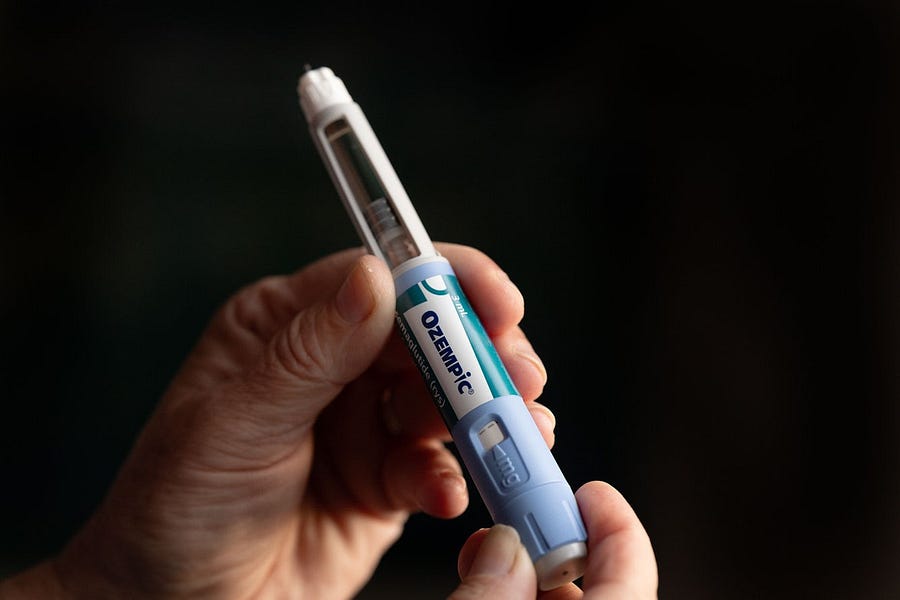
I just read that the patents of Novo Nordisk’s blockbuster drugs are expiring.
Developing a new drug is one of the most expensive and uncertain bets in modern business. On average, it takes between 10 and 15 years to move from early discovery to regulatory approval. Thousands of compounds are tested along the way, and the vast majority fail. By some estimates, only 1 in 5,000 to 10,000 candidate molecules ever makes it to market. The rest disappear quietly after consuming years of research and millions, sometimes billions, of dollars.
By the time a drug is approved, the company behind it may have spent over $1 billion, and in some cases closer to $2 billion, when you factor in failed attempts and the cost of capital. These are not just laboratory expenses. They include clinical trials across multiple phases, regulatory submissions, manufacturing scale-up, and the long process of proving that a drug is both safe and effective.
This is the economic problem patents are designed to solve. Without protection, a competitor could simply replicate a successful drug as soon as it is released, undercut the price, and avoid the enormous upfront cost of discovery. In that world, very few companies would take the initial risk. Who wants to take all the risks, only for another company to buy the drug and make a replica?
Patents, which typically last 20 years from the date of filing, give pharmaceutical companies a temporary monopoly. In practice, because so much time is spent on development, the effective market exclusivity is often closer to 8 to 12 years. During that window, companies price their drugs not just to cover manufacturing costs, but to recover years of investment and fund future research.
This is why some medicines appear expensive, even prohibitively so. The price is not just about the pill in your hand. It reflects a long chain of failed experiments, abandoned compounds, and scientific dead ends that made that pill possible.
A clear example of how this plays out today can be seen in semaglutide, the compound behind Ozempic and Wegovy, developed by Novo Nordisk. These drugs have transformed the treatment of diabetes and, more recently, obesity, becoming some of the most commercially successful pharmaceuticals in the world.
While it’s saved countless lives, or because it’s saved countless lives, it’s also being wildly financially successful for the company. In 2024 alone, Novo Nordisk generated about $40–42 billion in total revenue. A huge share of that came from semaglutide drugs (Ozempic + Wegovy) In fact, these drugs accounted for roughly 55% of the company’s revenue in 2023. Because of these drugs, Novo Nordisk became Europe’s most valuable company. Because of Ozempic and Wegovy, Novo Nordisk contributed almost all of Denmark’s economic growth in some periods. Denmark’s GDP growth forecasts were revised upward largely because of the company. Without pharma exports (driven by Novo), Denmark might have had zero growth in 2023.
And that’s because of the monopoly it’s granted. In markets like the United States, semaglutide remains under patent protection and is priced accordingly, often costing hundreds of dollars per month. In countries such as India and China where 1.1+ billion adults are overweight or have diabetes, the price has also been relatively high compared to average incomes, typically ranging between $100 and $200 per month. That places the drug just out of reach for a lot of people.
But the patent clock has been ticking since the early days of its development. As protections begin to expire in key markets, the dynamics shift rapidly. Generic manufacturers, who did not bear the original research costs, are able to produce the same compound at a fraction of the price. In India alone, dozens of companies are preparing to enter the market, and analysts expect prices to fall sharply, potentially to around $15 per month.
This is the patent cliff in action. A drug that once generated billions in revenue begins to lose market share within months. For patients, this is often a moment of relief. For the original manufacturer, it is a turning point that has been anticipated for years.
Pharmaceutical companies do not simply wait for this moment to arrive. They plan for it carefully. In the years leading up to patent expiry, they may adjust pricing strategies in certain markets, pursue legal avenues to extend exclusivity, or develop new versions of the drug with incremental improvements.
In the case of semaglutide, its evolution from a diabetes treatment to a widely used weight-loss drug significantly expanded its market before generic competition could take hold. This kind of repositioning is part of a broader strategy to maximise the value of a drug within its limited window of exclusivity.
Geography also plays a crucial role. Patent protections do not expire everywhere at the same time. While generics begin to spread in parts of Asia, markets like the United States will remain protected well into the 2030s. The result is a fragmented global landscape where access and affordability vary dramatically depending on where a patient lives.
This raises important questions about fairness and access, particularly in lower-income countries. At the same time, it highlights the delicate balance at the heart of the pharmaceutical system. Without the promise of patent protection, the incentive to invest in high-risk, long-term drug development would be significantly weakened. Without the eventual expiration of those patents, access to life-changing medicines would remain permanently restricted.
What we are seeing now with semaglutide is not unusual. It is the system working exactly as designed. A period of exclusivity rewards innovation, followed by a wave of competition that expands access.
The tension between those two phases is not easily resolved. It is built into the structure of modern medicine. Every breakthrough carries within it a deadline, and every affordable generic is, in a sense, the final chapter of a much longer and more expensive story.
For patients in countries where generics are about to arrive, that story is entering its most hopeful phase. For the companies that created these drugs, the focus has already shifted to what comes next.

