
EXPLAINER: Why Is Israel Recognising Somaliland
EXPLAINER: Why Is Israel Recognising Somaliland
 Tosin Adeoti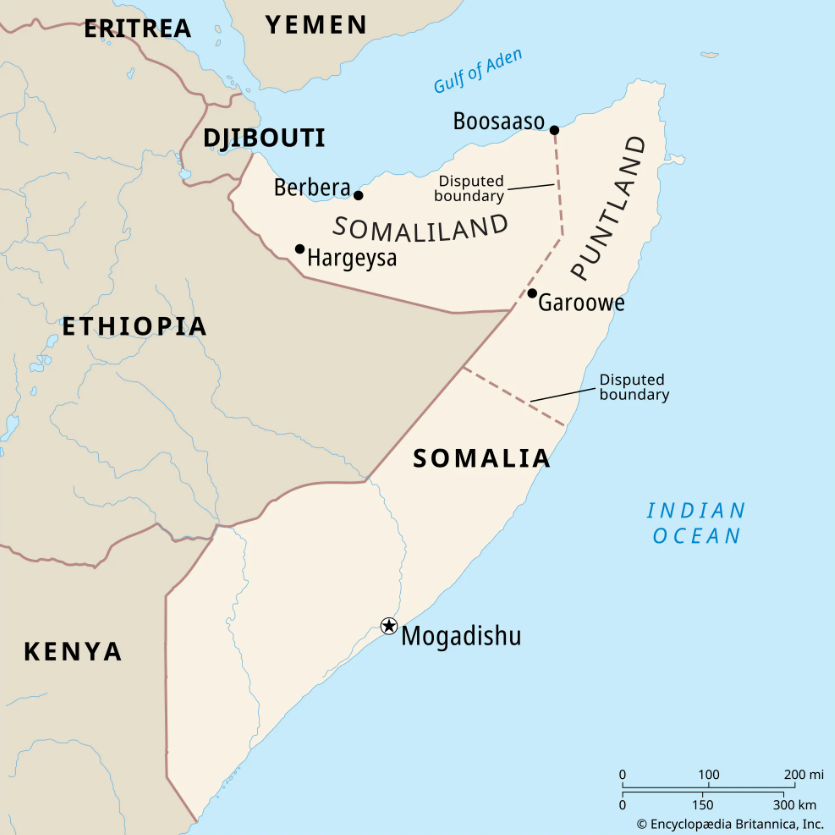
A couple days ago, Israel took the controversial decision to recognise the breakaway state of Somaliland as an independent nation. While opinions have been divided against this, especially has President Trump has refused to follow suit, at least for now, some do not even understand what’s happening. This article is an attempt to provide clarity to those who are asking: “Wait. Isn’t Somaliland part of Somalia? How can Israel just recognise it?”
So, fair question. Let’s break it down.
First things first. What just happened?
Israel announced that it is officially recognising Somaliland as an independent state.
This makes Israel the first country in the world to do so, more than 30 years after Somaliland declared independence from Somalia in 1991.
And people are celebrating?
In Somaliland, yes. Big time.
Thousands poured into the streets of Hargeisa (the capital) and other cities, waving flags, chanting slogans, and celebrating what they see as long-overdue validation. Somaliland’s flag was even raised alongside Israel’s at a public ceremony.
For a territory that has spent decades knocking on closed diplomatic doors, this felt historic.
Why is Somaliland even seeking recognition?
Because Somaliland believes it already did everything a country is supposed to do.
It has its own government, elections, currency, passport, police force, army, and borders it controls. It has also been far more stable than Somalia, which has battled insurgency, state collapse, and Islamist militancy for decades.
Supporters say the real question is not why recognise Somaliland, but why it has not been recognised already.
But wait. Was Somaliland ever a country?
Sort of, briefly.
Somaliland was a British protectorate known as British Somaliland. In 1960, it gained independence and voluntarily merged with Italian Somaliland to form the Somali Republic. British Somaliland became independent first, on 26 June 1960, while Italian Somaliland followed on 1 July 1960.
That union collapsed after years of repression under dictator Siad Barre. Following Barre’s overthrow in 1991, Somaliland declared independence and reverted to its old colonial-era borders.
Somalia has never accepted that separation.
Hey, slow down. Tell me more about Siad Barre.
Sure. Even before Barre. The union unraveled almost immediately. Political power, economic investment, and state institutions became heavily concentrated in the south. Many in the north (from the map, that’s Somaliland) felt marginalised and treated as junior partners in a union they had entered willingly but without safeguards.
After General Siad Barre seized power in 1969, repression intensified across Somalia. In the north, it was especially brutal.
During the 1980s, Barre’s regime bombed cities in Somaliland, including Hargeisa, killing tens of thousands of civilians and flattening entire towns. Many Somalilanders describe this period as genocidal.
For them, the entire Somali state turned violently against them.
So what happened in 1991?
Siad Barre was overthrown. The Somali state collapsed. There was no functioning central government.
At that point, Somaliland’s leaders said, in effect:
“The union we voluntarily entered in 1960 has failed. The state that was meant to protect us no longer exists. We are withdrawing from that union.”
So in 1991, Somaliland reasserted the borders of the former British Somaliland, arguing that it was not seceding from Somalia, but dissolving a failed merger and returning to its original sovereignty.
And Somalia refused?
Yes. Mogadishu argues that Somalia became a single sovereign state in 1960, and that its territorial integrity is inviolable.
And that’s why people in Somaliland are so excited right now about Israel who they see as the first step towards recognition by the United States. And you know that once the US recognizes you, it’s only a matter of time before most of the rest of the world fall in line.
I see. That’s why Somalia is furious?
Absolutely.
Somalia’s president called Israel’s move an act of aggression, a violation of sovereignty, and an existential threat to Somalia’s unity.
From Mogadishu’s point of view, Somaliland is not a country seeking recognition. It is a region attempting secession, and Israel has just taken sides.
Why does the African Union also oppose it?
Because of precedent.
The African Union is deeply wary of redrawing borders in Africa. Many African states fear that recognising Somaliland could encourage separatist movements elsewhere, from West Africa to the Horn and beyond.
In short, they worry that one recognition could open a very messy door.
So why did Israel do this now?
This is where geopolitics enters the chat.
Somaliland sits on the Gulf of Aden, right at the mouth of the Red Sea. That corridor is critical to global shipping, military strategy, and Middle East security.
Israel has been facing attacks and threats from the Iran-backed Houthi rebels in Yemen, who operate along that same corridor. Analysts say Israel wants friendly footholds in the Red Sea region for intelligence.
From that perspective, Somaliland is a strategic asset for Israel
Is this about Gaza and Palestinians?
That suspicion is driving much of the backlash.
Earlier reports suggested that Israel had explored the idea of relocating Palestinians from Gaza to African territories, including Somaliland. Israel never confirmed this, but the idea alarmed many governments.
At the UN, several countries warned that Somaliland could be used for military bases or forced Palestinian resettlement. Somalia explicitly said it would never accept such a plan.
Somaliland, for its part, insists recognition has nothing to do with Gaza and that no one is being relocated anywhere.
What does Israel say?
Israel says recognition is not hostile, not illegal, and not an act of defiance.
Its diplomats argue that recognising Somaliland is no different from other countries recognising states they believe meet the criteria of sovereignty. They also say recognition does not rule out dialogue between Somalia and Somaliland.
The United States backed Israel at the UN, accusing critics of double standards, especially given recent recognitions of a Palestinian state.
But the US has not recognised Somaliland, right?
Correct.
Despite defending Israel diplomatically, the US says its own policy has not changed. President Trump even publicly downplayed the idea of recognising Somaliland anytime soon.
So for now, Israel stands alone.
What about regional powers like the UAE, Ethiopia, or Turkey?
Interesting silence.
The UAE has strong economic and military ties to Somaliland, including port access, but has said nothing publicly. Ethiopia, which once sought sea access through Somaliland, is also keeping quiet.
Analysts believe some regional actors may quietly welcome Israel’s move while publicly staying cautious to avoid fallout with Somalia and the African Union.
Then why are the Houthis threatening Somaliland?
Because from their perspective, any Israeli presence near the Red Sea is a military threat.
The Houthi leader warned that Israeli involvement in Somaliland would make it a legitimate target. That raised fears of Somaliland being pulled into wider Middle East conflicts it has so far avoided.
Does this mean Somaliland is now internationally recognised?
Not really.
Recognition by one country, even an influential one, does not automatically create international legitimacy. Somaliland still lacks UN membership, AU recognition, and diplomatic relations with most of the world.
But symbolism matters in diplomacy. This breaks a long-standing wall of non-recognition.
So what happens next?
Three things are likely.
First, Somalia will continue pushing back hard at the UN and regionally.
Second, Somaliland will use this recognition to lobby other states quietly.
Third, most countries will wait and watch rather than rush to follow Israel.
For now, Somaliland has momentum, Somalia has outrage, and the Horn of Africa has a new geopolitical fault line.
Whether this becomes the first crack in a dam, or just a loud but lonely gesture, is still an open question.
Thank you, Tosin.
Any time.

