
The Remote Work Lie
 Tosin Adeoti
 The Remote Work Lie: Why Young Professionals Are Fleeing Back to the Office
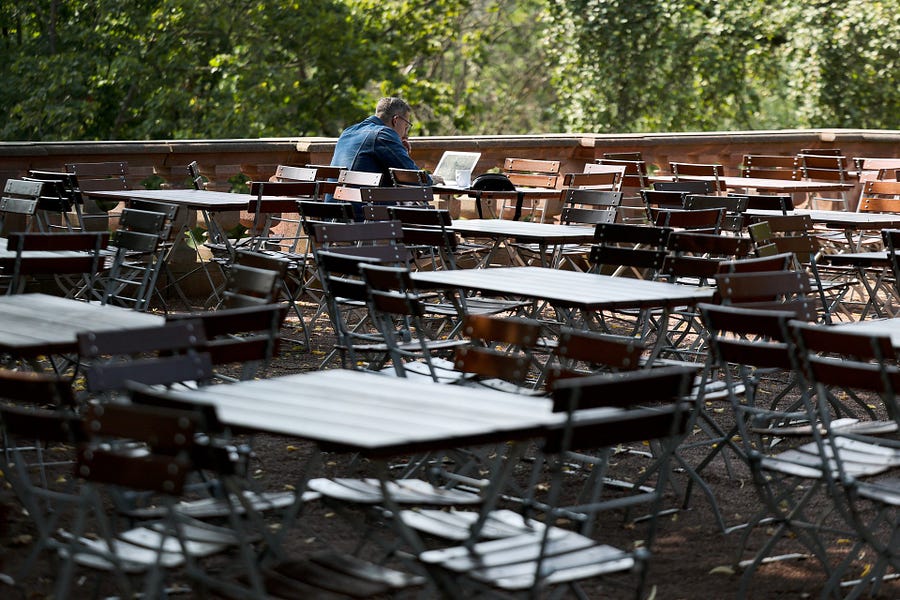
For a generation that championed flexible work, something unexpected is happening. The same 20- and 30-somethings who once swore never to return to commuting are now drifting back to the workplace.
Remote work, for all its freedom, has revealed a darker side for early-career professionals. The data now shows what many young workers have felt instinctively. That at home, they receive less training, fewer mentors, weaker professional networks, and significantly slower promotion opportunities.
In the last year alone, 42 percent of employees returned to the office. More than half say their networks became stronger once they did. A large majority admit that simply being seen by leadership improves their opportunities.
Young workers are paying attention.
Remote work gave the illusion of balance. It saved money and created flexibility. But for younger workers, it also removed the natural scaffolding that builds a career, in mentorship and exposure
When your manager only sees your name on a screen, you can disappear without anyone noticing. When learning happens through proximity, young workers miss the unplanned interactions where real growth happens. When promotions depend on trust and familiarity, visibility becomes a currency — and remote workers have less of it.
It became clear that the vital things that were missing are the sense of belonging to something larger than a task list.
Many early-career workers now see the office not as a burden but as a strategic advantage. They return because the alternative — being passed over or unseen — feels far worse.
They have more to prove, more to learn, and more to gain. And they know that certain things simply cannot be taught through a webcam.
They return for the energy of a team solving a problem around a table. For the mentor who pulls them aside after a meeting. For the manager who remembers their contribution because it happened in the same room. For the opportunities that flow toward those who are present.
The pandemic made remote work the default. Now the pendulum is swinging not out of force but out of necessity. Young workers are choosing career growth over comfort. They are choosing momentum over monotony.

